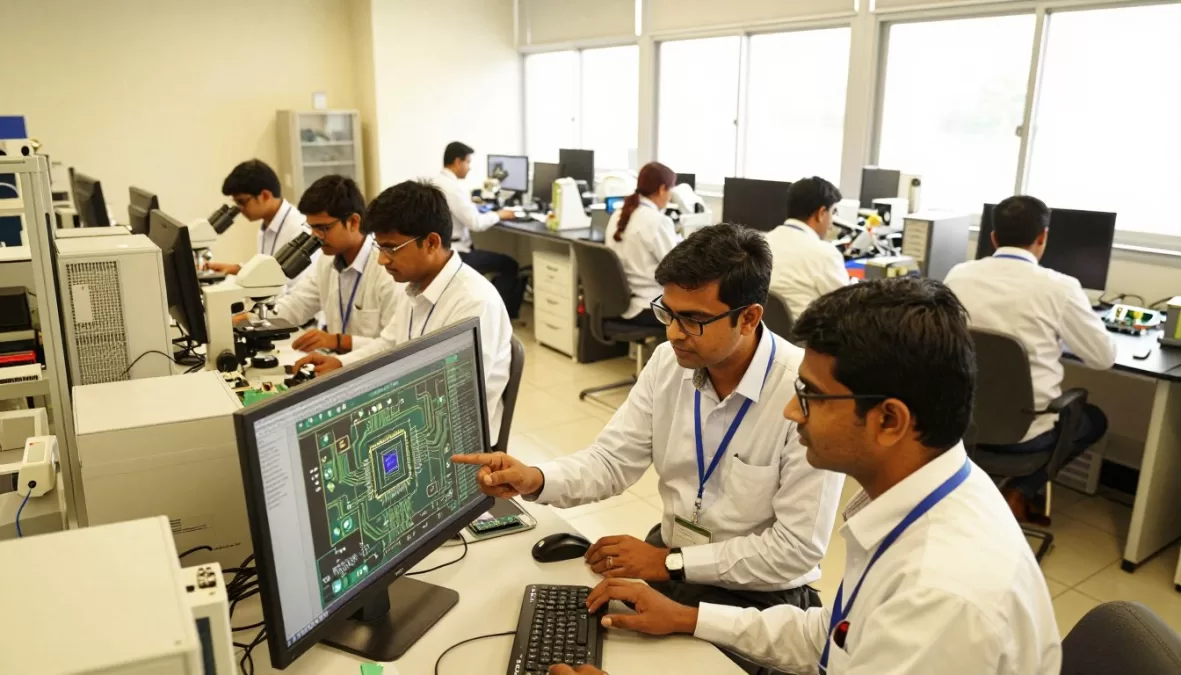
The technology landscape is shifting rapidly as the nation transforms into a global powerhouse for chip design and manufacturing. Professionals and students now have a unique window to enter the high-growth Semiconductor Jobs in India market. This sector offers immense potential for those ready to innovate and lead.
Government support and massive private investment are fueling this expansion. Understanding the current landscape is essential for anyone planning a long-term career in this field. We provide an authoritative overview of the technical skills and market dynamics needed to succeed in this competitive industry.
Key Takeaways
- The domestic chip industry is currently experiencing a period of rapid expansion.
- Government initiatives are providing strong support for new manufacturing facilities.
- Technical proficiency in chip design remains the most sought-after skill set.
- Strategic career planning is vital for long-term success in this evolving sector.
- Global companies are increasingly looking to local talent for complex engineering roles.
The Current Landscape of Semiconductor Jobs in India
The landscape for technical professionals in India is being reshaped by an unprecedented surge in semiconductor activity. This transformation is not merely a trend but a strategic pivot toward building a self-reliant hardware ecosystem. As global supply chains diversify, the nation is positioning itself as a critical hub for both design and fabrication.
Government Initiatives and the India Semiconductor Mission
The India Semiconductor Mission (ISM) serves as the primary catalyst for this industrial evolution. By providing substantial financial incentives and infrastructure support, the government has successfully attracted major global players to set up operations locally. As of May 18, 2026, the country has officially approved 13 major semiconductor projects, signaling a massive commitment to high-tech manufacturing.
These initiatives are creating a ripple effect across the labor market. The focus is shifting from simple assembly to complex research and development. Key benefits of these government-backed projects include:
- Increased demand for specialized engineering talent in VLSI and chip architecture.
- Development of world-class fabrication facilities that require highly skilled technicians.
- Enhanced collaboration between public research bodies and private technology firms.
Growth Projections for the Domestic Chip Industry
The long-term outlook for the domestic chip industry remains exceptionally positive. Analysts expect that the rapid expansion of local manufacturing will lead to a sustained increase in Semiconductor Jobs in India over the next decade. This growth is driven by the rising demand for electronics in automotive, consumer, and industrial sectors.
As the ecosystem matures, the nature of Semiconductor industry jobs is also evolving. Companies are no longer just looking for basic coding skills; they are prioritizing candidates with deep expertise in hardware-software integration. Professionals who align their career paths with these emerging sectors will likely find significant opportunities for advancement and long-term stability.
Key Regions Driving Semiconductor Employment Opportunities
As the nation pushes toward self-reliance in electronics, distinct regions are stepping up to host the next generation of semiconductor facilities. This geographic concentration is a defining feature of the industry, as companies cluster to share infrastructure and talent pools. For professionals, identifying these hubs is essential to finding the best Semiconductor Jobs in India.
The Rise of Bengaluru as a Silicon Hub
Bengaluru remains the undisputed leader in the domestic chip design landscape. The city hosts a dense network of global R&D centers, making it the primary destination for engineers specializing in VLSI and system architecture. Innovation thrives here, supported by a mature ecosystem of startups and established multinational corporations.
The concentration of talent in this region ensures that Semiconductor employment opportunities remain abundant for those with specialized technical skills. Companies continue to invest heavily in local talent to drive advancements in AI-integrated chip design. This established infrastructure makes the city a cornerstone for career growth in the sector.
Emerging Semiconductor Clusters in Gujarat and Telangana
While Bengaluru dominates design, new manufacturing-focused clusters are rapidly emerging in other parts of the country. A major development is currently underway in Dholera, Gujarat, where Tata Electronics and ASML are collaborating to build a massive front-end fabrication facility. This project is set to redefine the regional employment landscape for both hardware engineers and specialized technicians.
Similarly, Telangana has positioned itself as a critical hub by fostering a business-friendly environment for semiconductor manufacturing. These emerging clusters are creating diverse Semiconductor employment opportunities that cater to both design-focused and manufacturing-oriented professionals. By diversifying the geographic footprint of the industry, these states are ensuring that Semiconductor Jobs in India are accessible to a broader range of skilled workers across the country.
Major Companies Hiring for Semiconductor Vacancies
The Indian technology sector is currently witnessing a historic shift as international corporations and local innovators ramp up their presence. This rapid expansion is creating a wealth of semiconductor employment opportunities for skilled professionals across the nation. As the industry matures, understanding which organizations are leading the charge is vital for career planning.
Global Giants Expanding Operations in India
International leaders are establishing massive research and manufacturing footprints to tap into India’s deep engineering talent pool. Companies like Micron are investing heavily in state-of-the-art facilities, which has led to a significant rise in high-stakes semiconductor vacancies. These global firms prioritize candidates with expertise in advanced node technology and complex chip architecture.
Working for these multinational corporations often provides engineers with exposure to global standards and cutting-edge tools. They are actively seeking talent to fill roles in:
- Advanced verification and validation
- System-on-Chip (SoC) design
- Global supply chain management
- Process engineering and quality control
Domestic Players and Startups Shaping the Ecosystem
Beyond global giants, the domestic landscape is evolving through strategic partnerships and homegrown innovation. A prime example is the recent collaboration between HCL and Foxconn, which is currently building a major OSAT (Outsourced Semiconductor Assembly and Test) facility in Jewar, Uttar Pradesh. This project represents a significant milestone in India’s journey toward self-reliance in chip manufacturing.
The rise of these domestic players and agile startups is diversifying the job market. These organizations are often more flexible, offering unique roles that allow engineers to work on the full lifecycle of product development. By focusing on both large-scale manufacturing and niche design services, these companies are ensuring that the demand for specialized talent remains consistently high.
Essential Skills for Semiconductor Careers
Mastering the right technical competencies is the most effective way to unlock high-growth semiconductor careers. As the industry in India expands, recruiters are looking for candidates who possess a blend of theoretical knowledge and practical application. Building a strong foundation in core engineering disciplines is essential for long-term professional success.
Technical Proficiency in VLSI and Embedded Systems
The backbone of the chip industry lies in Very Large Scale Integration (VLSI) and embedded systems. Professionals must demonstrate deep proficiency in hardware description languages such as Verilog and SystemVerilog to succeed in these roles. These languages allow engineers to model complex digital circuits effectively.
Beyond coding, understanding computer architecture and low-power design techniques is vital. Companies often prioritize candidates who can bridge the gap between software instructions and hardware execution. This technical fluency ensures that systems operate with maximum efficiency and reliability.
The Importance of Chip Design and Verification Expertise
Modern integrated circuits are becoming increasingly complex, making verification a critical stage in the product lifecycle. Verification engineers ensure that a chip functions exactly as intended before it reaches mass production. This role requires a meticulous eye for detail and a strong grasp of simulation tools.
“The future of the semiconductor industry depends on our ability to verify increasingly complex designs with absolute precision. Talent that masters both design and validation will lead the next wave of innovation.”
Developing expertise in these areas is a proven strategy for those pursuing semiconductor careers. The following table outlines the core skill sets required for various specialized roles within the industry.
| Skill Category | Primary Tools | Key Responsibility |
|---|---|---|
| VLSI Design | Verilog, VHDL | Circuit Architecture |
| Verification | SystemVerilog, UVM | Bug Detection |
| Embedded Systems | C, C++, RTOS | Firmware Development |
| Physical Design | Cadence, Synopsys | Layout Optimization |
By focusing on these essential competencies, you position yourself as a valuable asset in the global market. Continuous learning remains the hallmark of those who excel in semiconductor careers, as the technology landscape shifts rapidly toward more advanced nodes and AI-driven design.
Educational Pathways and Training Programs
India currently hosts nearly 20% of the global semiconductor chip design workforce, a testament to the country’s growing technical prowess. To sustain this momentum, aspiring professionals must navigate a clear educational roadmap that aligns with global industry standards. Pursuing semiconductor careers requires a strategic combination of foundational engineering knowledge and targeted, hands-on expertise.
Academic Degrees and Specialized Certifications
The journey typically begins with a strong undergraduate degree in Electronics and Communication Engineering or Electrical Engineering. Many students then opt for specialized Master’s programs in VLSI design, embedded systems, or microelectronics to gain a competitive edge. These degrees provide the theoretical framework necessary for complex chip architecture and verification tasks.
Beyond formal university degrees, specialized certifications have become essential for those looking to enter the workforce quickly. Short-term courses offered by private training institutes focus on industry-standard tools like Cadence, Synopsys, and Mentor Graphics. These programs are designed to bridge the gap between classroom theory and the practical demands of modern semiconductor careers.
Industry-Academia Partnerships for Skill Development
Leading global firms are increasingly collaborating with top-tier Indian universities to create a pipeline of industry-ready talent. These partnerships often involve setting up state-of-the-art labs, curriculum design, and internship programs that provide students with real-world exposure. By integrating industry feedback into academic syllabi, these initiatives ensure that graduates are prepared for the evolving needs of the chip sector.
These collaborative efforts are vital for maintaining India’s position as a global design hub. Through these programs, students gain access to mentorship from seasoned engineers and exposure to cutting-edge research projects. This synergy between academia and the private sector is a cornerstone for anyone aiming to build a long-term, successful path in semiconductor careers.
| Education Type | Primary Focus | Duration | Career Impact |
|---|---|---|---|
| B.Tech/M.Tech | Foundational Theory | 2-4 Years | High (Core Knowledge) |
| VLSI Certification | Tool Proficiency | 3-6 Months | High (Job Readiness) |
| Industry Internship | Practical Application | 6-12 Months | Very High (Networking) |
Analyzing Semiconductor Job Openings by Role
Navigating the landscape of semiconductor job openings requires a clear understanding of the distinct technical domains involved in modern chip production. The industry is highly specialized, meaning that your specific background in engineering will dictate which career path offers the most potential for growth.
By breaking down these roles, candidates can better align their academic training and professional experience with the needs of the market. Whether you are an expert in logic or a specialist in physical layout, there is a place for you in this expanding ecosystem.

Front-End Design and Architecture Positions
Front-end roles are the creative heart of the chip development process. Professionals in this space focus on system architecture, RTL coding, and functional verification to ensure the design meets performance requirements.
Engineers here work closely with high-level specifications to build the logic that powers everything from smartphones to advanced servers. Success in these roles demands a deep understanding of hardware description languages like Verilog or SystemVerilog.
Back-End Physical Design and Layout Roles
Once the design is finalized, back-end engineers take over to transform logical models into physical silicon. This phase involves complex tasks such as floorplanning, place and route (P&R), and timing closure.
These experts ensure that the chip is efficient, reliable, and manufacturable. They use sophisticated EDA tools to verify that the physical layout adheres to strict design rules, preventing costly errors during the fabrication stage.
Manufacturing and Fabrication Engineering Opportunities
Manufacturing roles are critical for the physical realization of semiconductor devices. As India scales its production capabilities, new semiconductor vacancies are emerging in high-tech fabrication plants.
A prime example is the upcoming Tata-ASML facility in Dholera, which will focus on manufacturing chips for the AI and automotive sectors. Engineers in this field manage the delicate chemical and mechanical processes required to print circuits onto silicon wafers at a microscopic scale.
| Role Category | Primary Focus | Key Skill Requirement |
|---|---|---|
| Front-End | Architecture & Logic | SystemVerilog/RTL |
| Back-End | Physical Layout | Timing Closure/P&R |
| Manufacturing | Fabrication Process | Cleanroom Operations |
Impact of Global Supply Chain Shifts on Indian Hiring
Global supply chain realignments are fundamentally reshaping the landscape for semiconductor industry jobs in India. As multinational corporations seek to build more resilient and diversified operations, they are increasingly turning their attention toward the Indian market. This shift is not merely about logistics; it is about tapping into a vast pool of engineering talent capable of handling complex chip design and manufacturing tasks.
The China Plus One Strategy and Its Benefits
The “China Plus One” strategy has become a cornerstone for companies aiming to mitigate risks associated with over-reliance on a single manufacturing hub. By expanding their footprint into India, these firms gain access to a stable, growing ecosystem that supports long-term growth. This strategic move is a primary driver for new semiconductor industry jobs, as companies establish regional headquarters and R&D centers to support their global objectives.
Professionals in the field now have the unique opportunity to work on projects with significant global impact. The influx of international operations fosters a culture of innovation and knowledge transfer. This environment allows local engineers to gain expertise in cutting-edge technologies that were previously concentrated in other parts of the world.
Attracting Foreign Direct Investment for Talent Acquisition
Foreign Direct Investment (FDI) is playing a pivotal role in accelerating the growth of the domestic chip sector. As global players pour capital into local infrastructure, the demand for specialized talent has reached an all-time high. This investment is not just building factories; it is creating a robust pipeline for semiconductor industry jobs across various technical domains.
The following table highlights the key advantages that attract international firms to invest in the Indian semiconductor workforce:
| Strategic Factor | Benefit to Industry | Impact on Hiring |
|---|---|---|
| Talent Availability | High volume of engineering graduates | Increased entry-level recruitment |
| Cost Efficiency | Competitive operational expenses | Expansion of R&D teams |
| Policy Support | Government incentives and subsidies | Long-term career stability |
| Market Proximity | Access to emerging tech markets | Growth in senior leadership roles |
Ultimately, the combination of strategic diversification and increased FDI is transforming India into a global powerhouse. This evolution ensures that semiconductor industry jobs will remain a high-growth career path for years to come. Professionals who align their skills with these global trends are well-positioned to thrive in this dynamic environment.
Navigating the Semiconductor Job Search Process
Landing a position in India’s booming chip industry involves more than just submitting resumes. A successful Semiconductor job search requires a blend of technical readiness and strategic networking to capture the attention of top recruiters.
Leveraging Professional Networks and Industry Portals
Building a strong professional presence is essential for discovering hidden Semiconductor job openings. You should actively engage with industry-specific groups on platforms like LinkedIn to stay updated on emerging trends and company hiring cycles.
Many firms prioritize candidates who demonstrate active participation in the engineering community. Regularly monitoring specialized job portals and company career pages ensures you never miss a high-value opportunity in this fast-paced sector.
Preparing for Technical Interviews in the Chip Sector
Once you secure an interview, your success depends on your grasp of core technical fundamentals. Recruiters in this field look for candidates who can bridge the gap between theoretical knowledge and practical project experience.
Be prepared to discuss your past projects in detail, focusing on your specific contributions and problem-solving abilities. Most technical interviews for Semiconductor job openings will test your proficiency in digital design concepts, architecture, and scripting languages like Python or Tcl.
Mastering these technical areas is the most effective way to distinguish yourself from other applicants. By showcasing your analytical mindset and hands-on expertise, you significantly increase your chances of landing a role at a leading firm.
Compensation Trends and Career Growth Trajectories
As the domestic market races toward a projected US$109 billion valuation by 2030, understanding compensation structures becomes essential for professionals. The rapid expansion of the industry creates a high demand for specialized talent, directly influencing how companies structure their pay packages. Evaluating these financial rewards is a critical step for anyone exploring Semiconductor careers in the current Indian market.

Salary Benchmarks for Entry-Level and Senior Engineers
Compensation in this sector is highly competitive, reflecting the scarcity of specialized skills in VLSI and chip architecture. Entry-level engineers often start with strong base salaries, while those with niche expertise in verification or physical design command significant premiums. When reviewing Semiconductor job listings, candidates should note that total compensation often includes performance bonuses and stock options.
| Experience Level | Estimated Salary Range (INR) | Key Focus Area |
|---|---|---|
| Entry-Level | 6L – 12L per annum | Foundational Design |
| Mid-Level | 15L – 30L per annum | Verification & Layout |
| Senior/Lead | 35L – 60L+ per annum | Architecture & Strategy |
Long-Term Career Progression in Semiconductor Firms
The path for growth in this industry is both structured and rewarding. Professionals typically begin as design or verification engineers before moving into specialized roles such as Principal Architect or Engineering Manager. This progression is supported by the continuous need for innovation as firms scale their operations to meet global demand.
Several factors contribute to a successful long-term trajectory within the sector:
- Continuous Learning: Staying updated with emerging tools and methodologies is vital.
- Cross-Functional Exposure: Working across different stages of the chip lifecycle enhances your value.
- Strategic Networking: Engaging with industry leaders helps in identifying high-growth Semiconductor job listings.
Ultimately, the combination of a booming market and the need for high-end R&D ensures that Semiconductor careers remain among the most lucrative paths for technical professionals in India. Those who invest in their skill sets today are well-positioned to lead the next wave of technological advancement.
Challenges Facing the Indian Semiconductor Workforce
Building a world-class semiconductor hub in India is a journey that requires addressing critical workforce and infrastructure limitations. While the industry shows immense promise, stakeholders must navigate complex hurdles to ensure long-term sustainability. Understanding these obstacles is vital for professionals currently engaged in a semiconductor job search.
Addressing the Talent Gap in Specialized Domains
The rapid expansion of the chip industry has created a surge in demand for highly skilled engineers. However, India currently faces a noticeable talent gap in specialized domains such as high-end research and development and advanced packaging. Many firms struggle to find candidates with the deep technical expertise required for complex architectural design.
To bridge this divide, the government and private sector are launching targeted training initiatives. These programs focus on upskilling existing engineers to meet the rigorous demands of modern semiconductor vacancies. By fostering a culture of continuous learning, the industry aims to build a pipeline of experts capable of handling next-generation technology.
Infrastructure Requirements for High-End R&D
Beyond human capital, the industry requires robust physical infrastructure to support high-end R&D. Establishing state-of-the-art cleanrooms and testing facilities is essential for domestic innovation. Without these specialized environments, even the most talented engineers cannot perform advanced fabrication or verification tasks.
Collaboration between academic institutions and global corporations is helping to mitigate these infrastructure deficits. These partnerships provide students and researchers with access to cutting-edge tools and simulation software. As these facilities grow, the landscape for those conducting a semiconductor job search will become increasingly competitive and rewarding.
| Challenge Area | Primary Obstacle | Strategic Solution |
|---|---|---|
| Specialized Talent | Lack of R&D expertise | Industry-led training |
| Physical Infrastructure | Limited cleanroom access | Public-private partnerships |
| Advanced Packaging | Technical skill shortage | Academic curriculum updates |
| Innovation Ecosystem | High entry costs | Government R&D subsidies |
Future Outlook for Semiconductor Industry Jobs
As we look toward 2035, the landscape for semiconductor employment opportunities is undergoing a massive transformation. The industry is moving beyond traditional manufacturing into highly specialized domains that require advanced technical expertise. Professionals who adapt to these shifts will find themselves at the forefront of a global technological revolution.
Technological Advancements and Future Demand
The demand for talent is set to surge in emerging sectors such as edge computing, automotive electronics, and high-performance computing. These fields require engineers who can navigate complex architectures and power-efficient designs. As India strengthens its domestic fabrication capabilities, the need for specialized engineers will continue to climb steadily.
Companies are increasingly seeking experts who understand the entire lifecycle of a chip. This includes everything from initial system architecture to final testing and validation. By focusing on these high-growth areas, workers can secure long-term semiconductor industry jobs that offer both stability and intellectual challenge.
The Role of Artificial Intelligence in Chip Design
Artificial intelligence is becoming a critical driver for the 2026-2035 period, fundamentally changing how engineers approach design workflows. AI-driven tools now automate repetitive tasks, allowing designers to focus on complex problem-solving and innovation. This shift is creating a new category of semiconductor industry jobs that blend traditional hardware knowledge with machine learning proficiency.
Engineers who master AI-integrated design platforms will be highly sought after by global firms operating in India. These semiconductor employment opportunities will prioritize candidates who can leverage automated synthesis and verification to reduce time-to-market. Embracing these digital tools is essential for any professional aiming to remain competitive in the evolving global market.
Conclusion
India stands at a historic turning point as the domestic chip ecosystem matures into a global powerhouse. Professionals who master core technical fundamentals position themselves to lead this technological revolution. You now possess the insights needed to navigate the competitive landscape with confidence.
Active engagement with industry platforms remains vital for tracking new Semiconductor job openings. Companies like Intel, NVIDIA, and Tata Electronics continue to scale their operations across major hubs. Monitoring these firms helps you stay ahead of emerging trends and shifting market demands.
Your Semiconductor job search requires a strategic approach to networking and skill validation. Dedicated portals provide access to the latest Semiconductor job listings that match your specific engineering expertise. Consistent effort in refining your technical profile will unlock doors to high-impact roles.
The path toward a rewarding career in this sector is open for those ready to commit to continuous learning. Use the knowledge gained here to target the right organizations and secure your place in the future of hardware innovation. Your journey toward professional excellence in the semiconductor field starts today.