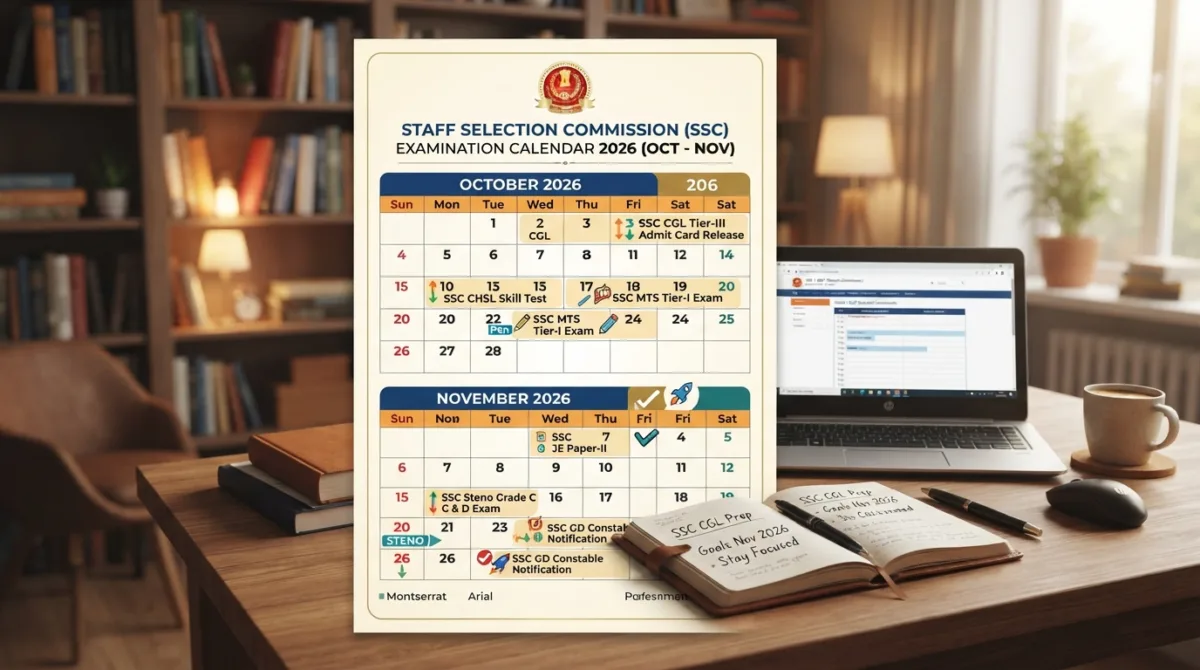
The Staff Selection Commission released its calendar on January 9, 2026. It gives candidates a useful view of tentative notification dates, application periods, and test windows. The first schedule places the Sub-Inspector test in October and November.
This guide focuses on that initial schedule and separates it from later reported revisions. It also previews key recruitments, including CGL, Junior Engineer, MTS and Havaldar, and Sub-Inspector posts. The ssc exam calendar is a planning tool, not a guarantee of final dates.
Check each notification at ssc.gov.in before making plans, since official notices confirm any changes. Here, you’ll find schedule comparisons, application reminders, verification steps, and a practical preparation plan for the 2026 cycle. Check the official portal often to stay ready.
Key Takeaways
- The calendar was released on January 9, 2026.
- The first schedule lists a fall window for Sub-Inspector recruitment.
- CGL, Junior Engineer, MTS, and Havaldar recruitments are also covered.
- Schedule windows are tentative; official notices confirm final details.
- Use the guide to track applications and plan your study routine.
SSC upcoming exam dates October November 2026: Official Schedule and Latest Updates
The first calendar and later schedule reports do not show the same windows. Use the ssc exam calendar as a planning guide, then confirm each entry through an official notice before you make travel or study plans.
Quick view of the listed windows
The initial schedule places Sub-Inspector tests in October–November. It lists MTS and Havaldar for September–November, though later reports describe their schedule as delayed or pending. CGL Tier I and Junior Engineer Paper I first appear in May–June.
Later reports place CGL from Sep. 30 to Oct. 30, and JE in Oct.–Nov. Other reported entries include Stenographer on Sep. 9–15, Selection Post on Sep. 16–26, and JHT on Sep. 8.
How to read revised windows
Reports place CGL in May–June, August–September, or Sep. 30–Oct. 30, depending on the calendar version. These are planning windows, not confirmed test dates. Check the date, issue details, and examination notice on ssc.gov.in before changing revision plans or booking travel. The exam-specific notification is the source to trust for a confirmed date.
What the SSC Exam Calendar 2026-27 Covers
One planning document brings a wide range of recruitment pathways into view. The staff selection commission’s exam calendar 2026 includes CGL, combined higher secondary (CHSL), MTS, GD Constable, Stenographer, Junior Engineer, CPO/SI, Selection Post, combined Hindi translators (JHT), and departmental examinations.
Its notification, application-closing, and test-month columns help candidates compare opportunities across the cycle. The initial calendar spans May through March of the following year, so application periods and preparation plans may overlap.
- Recruitment suits several education levels, from 10th-grade eligibility to 12th-grade and graduate-level posts.
- Selection Post Phase notices cover distinct vacancies and may set their own requirements.
- The ssc calendar offers a broad view, while each official notice gives the binding rules.
Use the calendar as a planning guide, not as a substitute for a detailed notification. Check each post’s eligibility, application rules, and examination instructions before applying. This helps aspirants focus on the right opportunities and build a realistic preparation plan.
SSC CGL and Junior Engineer Exam Dates for October-November
The listed windows changed as the cycle developed. Candidates should compare the original calendar 2026 with later reports and rely on official notices before making plans.
Tier I schedule and key updates
The initial calendar placed CGL Tier I in May–June, with a notification expected in March and applications due around April. Later reports gave windows in August–September or September 30 to October 30. One source also cited 12,256 vacancies for CGL 2026. Treat that figure as source-specific and confirm vacancies in the official notice.
Paper I window for engineering candidates
The original schedule set Junior Engineer Paper I for May–June. Revised reporting listed a September 2 notification, a September 22 application deadline, and a late-year test window. Verify each date before applying or changing your preparation plan.
How revised reporting differs
The early schedule is not the only reported version. Selection Post Phase XIV was reported for September 16–26, not as a late-year test. Check the official notification for confirmed details and any change to the examination window.
SSC MTS and Sub-Inspector Schedule Status
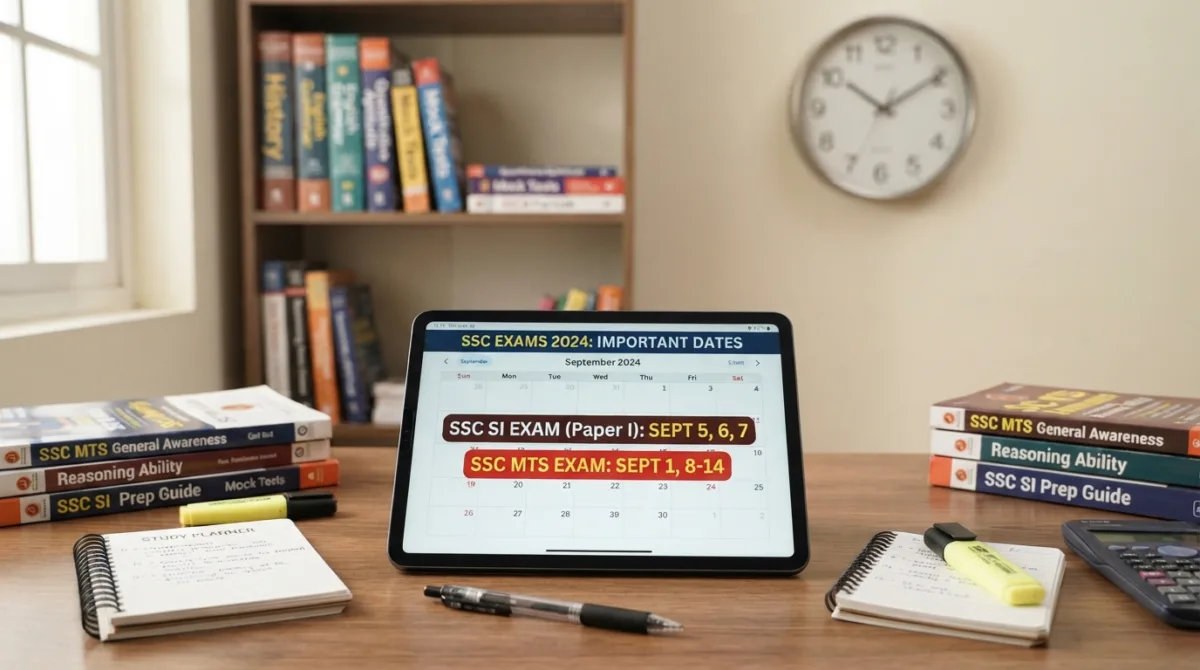
MTS and Havaldar planning now calls for a careful read of two schedule versions. The initial calendar 2026 places their test window from September through November. It tentatively lists June for the notification and July for the application deadline. Later reports describe a delay, with one revised schedule giving August 20 for release and September 20 as the closing date. Another report suggests a September 2026 release. These dates remain unconfirmed until an official notice appears.
What candidates should know about the MTS and Havaldar dates
The Sub-Inspector recruitment covers Delhi Police and CAPF positions. The initial ssc calendar places this ssc exam in October–November, while revised reporting lists September 10 for the notification, September 30 for applications to close, and December for the examination.
Use the current official notice to confirm each exam date. Schedule reports differ, so candidates should avoid relying on an older estimate. Check the notice before changing travel plans or preparation. A verified date is safer than a reported window.
Recent and Upcoming SSC Exam Dates Beyond October
The initial exam calendar 2026 places combined higher secondary (CHSL) recruitment in July–September. Later reports shift the CHSL test to December. This change matters for candidates who are planning revision alongside other fall opportunities.
The first calendar lists stenographer and combined hindi translators (JHT) tests for August–September. Revised reporting gives stenographer a September 9–15 window and lists September 8 as the JHT exam date. Treat these as reported dates until an official notice confirms them.
The broader schedule also extends into 2027. It places GD Constable examinations in January–March, after an expected notification in september 2026. That timeline may affect preparation for candidates tracking a December test or a november 2026 opportunity.
Use the latest published SSC notice to guide final planning. Check each date before changing your study priorities, application plans, or travel arrangements. Nearby exams can compete for time, so keep a flexible revision plan and verify each examination window through official updates.
How to Check the Official SSC Calendar and Exam Updates
For reliable schedule details, begin with the Staff Selection Commission website at ssc.gov.in. The 2026–27 calendar appeared on January 9, 2026, but its listed windows are tentative and may change.
Find the calendar and notices online
Open the calendar PDF and review the latest notices on the Commission’s site. An exam-specific notification is the best source for a confirmed date, eligibility rules, vacancy details, and application steps. Check the notice for your post before making plans.
Verify updates with the right offices
As a test approaches, visit your regional website for local admit-card and result information. Third-party summaries can help you spot changes, but compare them with official SSC notices before you adjust your study or application plan.
- Use the current notification to confirm key requirements.
- Check regional pages for candidate-specific updates.
- Rely on official SSC information when reports differ.
Application Deadlines, Notifications, and Candidate Reminders
Application planning starts with a clear record of each notice and deadline. The calendar 2026 offers estimates, but later updates may change them. Keep a flexible plan for every ssc exam you may take.
Initial estimates placed CGL, Junior Engineer, and Selection Post notification activity in March, with application closings around April 2026. Later reports list May 21 for the CGL notice, April 13, 2026, for Selection Post, and September 2 for Junior Engineer. Treat each date as unconfirmed until you verify it.
Application periods often stay open for three to four weeks. Candidates can prepare their login details, photo, signature, and other records early. Then check the official notification for deadlines, eligibility, fees, and correction-window rules.
- Compare each update with the ssc calendar, since notifications can shift between versions.
- Submit the application well before the closing date to avoid last-minute issues.
Admit cards usually appear 10–15 days before a test and come through a separate notice, not the annual exam calendar. Check the official site for the release date and your regional instructions.
Preparation Plan for SSC Exams in October and November
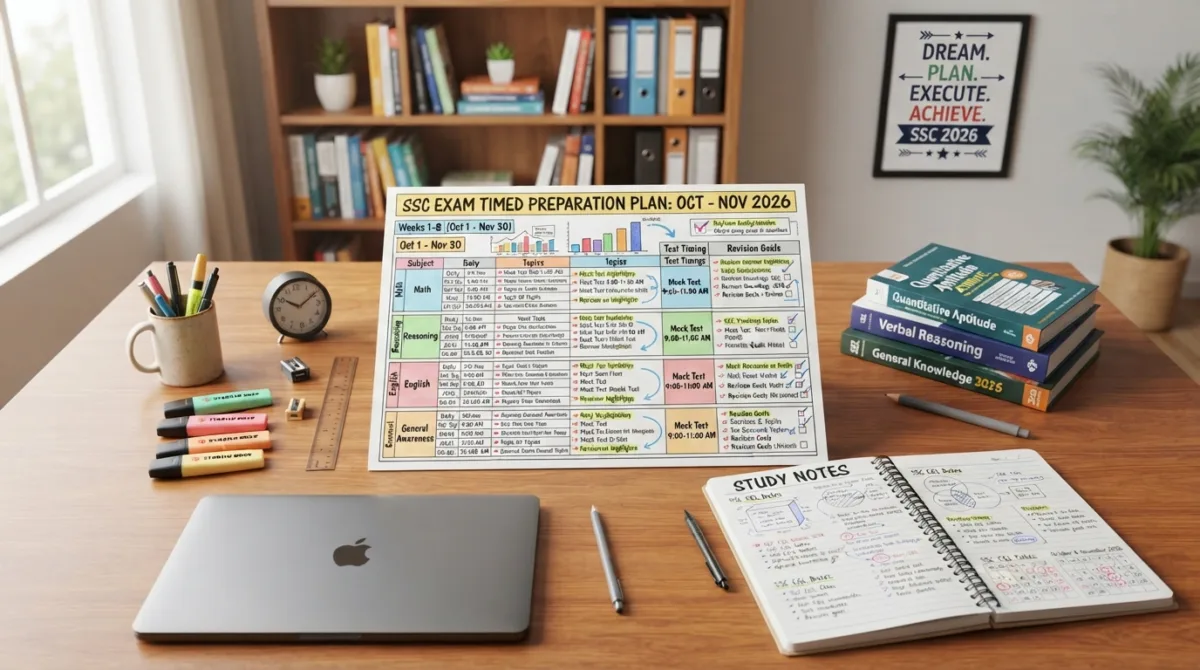
Turn the broad calendar 2026 into clear weekly goals. Use the first schedule as a guide, then adjust when an official notification confirms your date. Keep application records with your study tracker.
Prioritize revision, timed practice, and mock tests
Use January–February to build skills in Quantitative Aptitude, Reasoning, English, and General Awareness. From March–April, solve previous-year papers and review weak areas. After finishing the syllabus, allow 60–90 focused days for timed practice and mock tests. This calendar 2026 model can help aspirants plan backward.
“Build the base first, then train under time limits.”
Balance preparation across different posts
CGL and CHSL share core subjects, but some posts need extra practice. Candidates targeting junior engineer roles should reserve time for technical topics. Stenographer aspirants need typing or shorthand drills. Selection Post requirements vary by post. When schedules overlap, set weekly blocks for shared topics and protect time for each specific skill. Check the SSC calendar and latest notice before shifting priorities.
| Study area | Action | Best fit |
|---|---|---|
| Core subjects | Revise and solve timed sets | CGL, CHSL |
| Technical skills | Practice subject questions | Junior Engineer |
| Skill tests | Drill typing or shorthand | Stenographer |
Exam-Day Readiness and Next Steps After the Computer-Based Exam
For the 2026 cycle, many ssc exam sessions will use computer-based tests across multiple shifts. Read your admit card closely. It explains your reporting time, test center, permitted items, and entry rules. Follow those instructions to avoid delays on test day.
Check your regional ssc website as the date approaches. Admit cards usually appear 10–15 days before the test. The annual calendar gives a broad view, but the latest notification and your admit card provide the details for your examination.
A computer-based test may not be the final stage. Depending on the post, candidates may need to complete:
- Tier II for ssc cgl
- Typing or skill tests for CHSL
- Physical tests for GD Constable or CPO
Review the notice for each recruitment. Requirements differ, so do not assume all exams end after the first test. After your test date, monitor official updates for answer keys, results, and later-stage schedules. Keep checking the relevant regional site for verified information.
Conclusion
A sound plan starts with a flexible view of the recruitment cycle. The calendar 2026, released January 9, offers a useful guide to hiring opportunities, not a promise of fixed schedules.
Candidates tracking October–November should compare the original CGL, Junior Engineer, MTS, and Sub-Inspector windows with later updates. Treat listed dates as tentative. For confirmed deadlines and exam details, follow the current notice at ssc.gov.in.
Check the 2026 SSC calendar and your regional website as each test date nears. These sources provide notification details, admit-card updates, and local instructions.
Keep preparation steady with revision and timed practice. If several exams fall in one cycle, set weekly priorities and leave room to adjust. This flexible approach supports informed applications and selection plans.