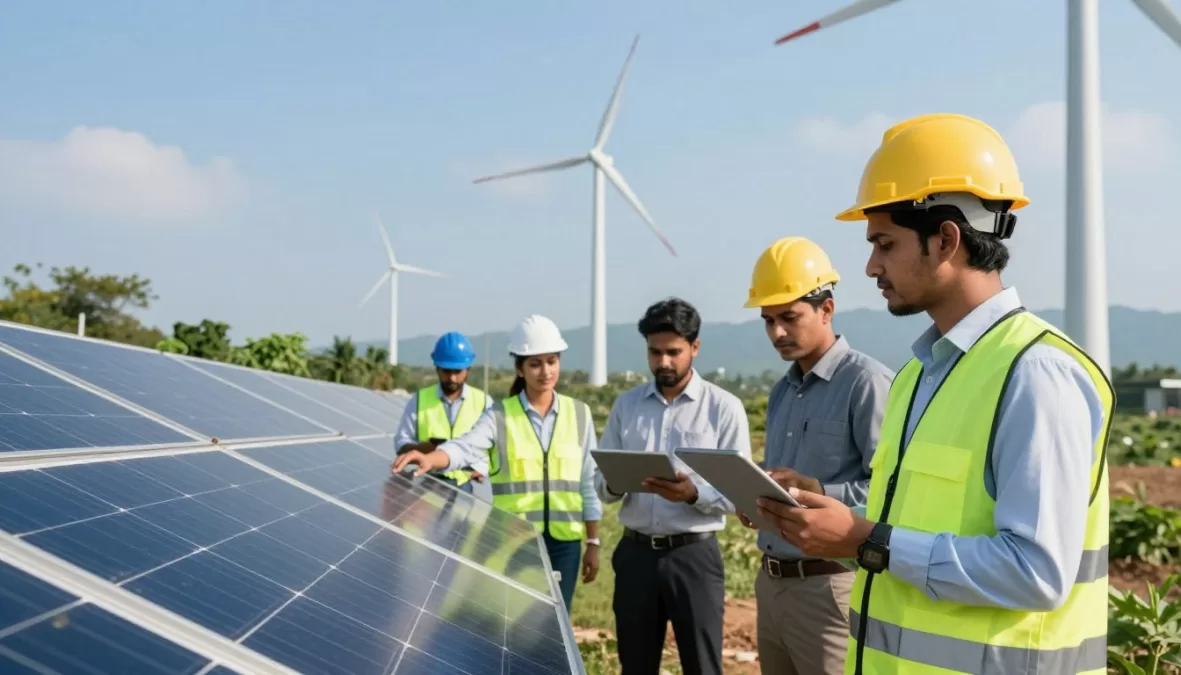
The professional landscape is undergoing a massive transformation as the nation accelerates toward ambitious net-zero targets. For those seeking a meaningful career, Green Energy Jobs in India 2026 represent the most significant opportunity of the decade.
This shift creates a high demand for specialized talent across the renewable sector. Companies are actively searching for skilled individuals who can drive innovation and support sustainable infrastructure projects. Positioning yourself now is essential for long-term professional success in this rapidly evolving market.
Understanding these structural changes will help you navigate the path ahead. Whether you are a fresh graduate or an experienced professional, the transition toward a cleaner economy offers diverse roles that reward expertise and dedication.
Key Takeaways
- The renewable sector is currently experiencing unprecedented growth due to national net-zero commitments.
- Specialized technical skills are in high demand as infrastructure projects scale up nationwide.
- Strategic career planning is vital for professionals aiming to enter the sustainable power market.
- The year 2026 serves as a critical milestone for workforce development and industry expansion.
- Candidates who adapt to these structural shifts will secure long-term stability and growth.
The Current Landscape of Green Energy Jobs in India 2026
Driven by ambitious national goals, the renewable energy sector India is becoming a primary engine for job creation. Recent data highlights that green hiring grew by 7.7% between 2024 and 2025, a rate that significantly outpaces global averages. This rapid expansion is creating a structural talent deficit, as organizations struggle to find qualified professionals to meet their net-zero commitments.
The demand for Green Energy Jobs in India 2026 is not merely a temporary trend but a fundamental shift in the labor market. Major corporations and global conglomerates are actively restructuring their hiring priorities to favor sustainability-focused roles. This transition is essential for maintaining competitiveness in an increasingly eco-conscious global economy.
Government Policy Shifts and Renewable Energy Targets
The Indian government has implemented aggressive mandates that serve as the backbone for this industrial evolution. By setting clear, time-bound targets for carbon neutrality, policymakers have provided the necessary certainty for long-term investment. These frameworks ensure that the transition to clean energy remains a top priority for both public and private stakeholders.
These policy shifts have directly influenced the types of roles available in the market. There is a growing need for professionals who understand regulatory compliance, grid integration, and large-scale infrastructure development. Consequently, the renewable energy sector India is attracting top-tier talent from traditional engineering and management backgrounds.
The Surge in Private Sector Investment
Capital inflow into the sustainable energy space has reached record levels, fueling a massive expansion in project development. Private equity firms and venture capitalists are pouring resources into innovative startups and established energy giants alike. This influx of capital is the primary driver behind the surge in Green Energy Jobs in India 2026.
Companies are now prioritizing the acquisition of specialized skills to manage these complex projects. From smart grid management to advanced solar engineering, the private sector is competing to secure the best human capital. This competitive environment is leading to better compensation packages and more stable career paths for those entering the field.
Key Growth Sectors in the Renewable Energy Market
India’s ambitious goal of reaching 500 GW of renewable capacity by 2030 is fundamentally reshaping the national labor market. This massive structural shift has triggered a surge in renewable energy jobs across the entire energy value chain. Professionals are no longer limited to traditional power roles, as demand now spans procurement, finance, and advanced data analytics.
Solar Power Infrastructure and Maintenance
The solar sector remains the backbone of India’s green transition, requiring a constant influx of engineering talent. Large-scale utility projects demand experts in photovoltaic system design and grid integration. Beyond initial construction, there is a growing need for specialized technicians to handle long-term maintenance and performance optimization.
Wind Energy Expansion and Offshore Projects
Wind energy is moving into a new phase of industrial deployment, particularly with the rise of offshore wind farms. This expansion creates high-value renewable energy jobs for structural engineers and marine logistics experts. Companies are actively seeking talent capable of managing complex supply chains and large-scale turbine installations in challenging coastal environments.
Green Hydrogen and Emerging Technologies
Green hydrogen represents the next frontier for sustainable industrial growth in India. As pilot projects transition into commercial-scale operations, the demand for chemical engineers and process specialists is rising sharply. These emerging technologies require a workforce that can bridge the gap between laboratory research and real-world infrastructure deployment. Securing renewable energy jobs in this niche sector offers professionals a chance to lead the country’s decarbonization efforts while building a stable, future-proof career.
Geographic Hubs for Sustainable Energy Careers
The environmental job market India is currently shaped by regional specialization and state-level infrastructure support. Professionals seeking sustainable energy careers must understand that specific states have become the primary engines for the nation’s renewable energy expansion.
Renewable Energy Clusters in Gujarat and Rajasthan
Gujarat and Rajasthan stand out as the undisputed leaders in solar and wind capacity. These states offer vast, arid landscapes that are ideal for large-scale utility projects, creating a high demand for site engineers and maintenance technicians.
Many companies operating in these regions maintain a hybrid structure. While they keep their headquarters in Europe or the US to access global talent, they maintain robust operational hubs in South Asia to manage local infrastructure.
“The rapid scaling of solar parks in the Thar Desert has transformed the local economy, turning remote regions into vital nodes for national energy security.”
Southern India as a Tech Hub for Green Innovation
Southern India is leveraging its existing tech infrastructure to become a center for software-driven energy management. Cities like Bengaluru and Chennai are attracting firms that focus on smart grid technology, energy storage software, and AI-driven efficiency tools.
This region is perfect for professionals with backgrounds in data analytics and software engineering. The focus here is less on physical installation and more on the digital optimization of the power grid.
Policy Support for Manufacturing Zones
Government initiatives have successfully incentivized the creation of dedicated manufacturing zones for renewable components. These zones provide tax benefits and streamlined logistics, which attract major players in the environmental job market India.
These hubs are essential for those pursuing sustainable energy careers in manufacturing, supply chain management, and quality control. The following table highlights the primary focus areas for these geographic clusters:
| Region | Primary Focus | Key Job Roles |
|---|---|---|
| Gujarat/Rajasthan | Solar & Wind Generation | Site Engineers, Maintenance |
| Southern India | Tech & Software Innovation | Data Analysts, Grid Managers |
| Manufacturing Zones | Component Production | Supply Chain, Quality Control |
Essential Skills for the Green Technology Employment Market
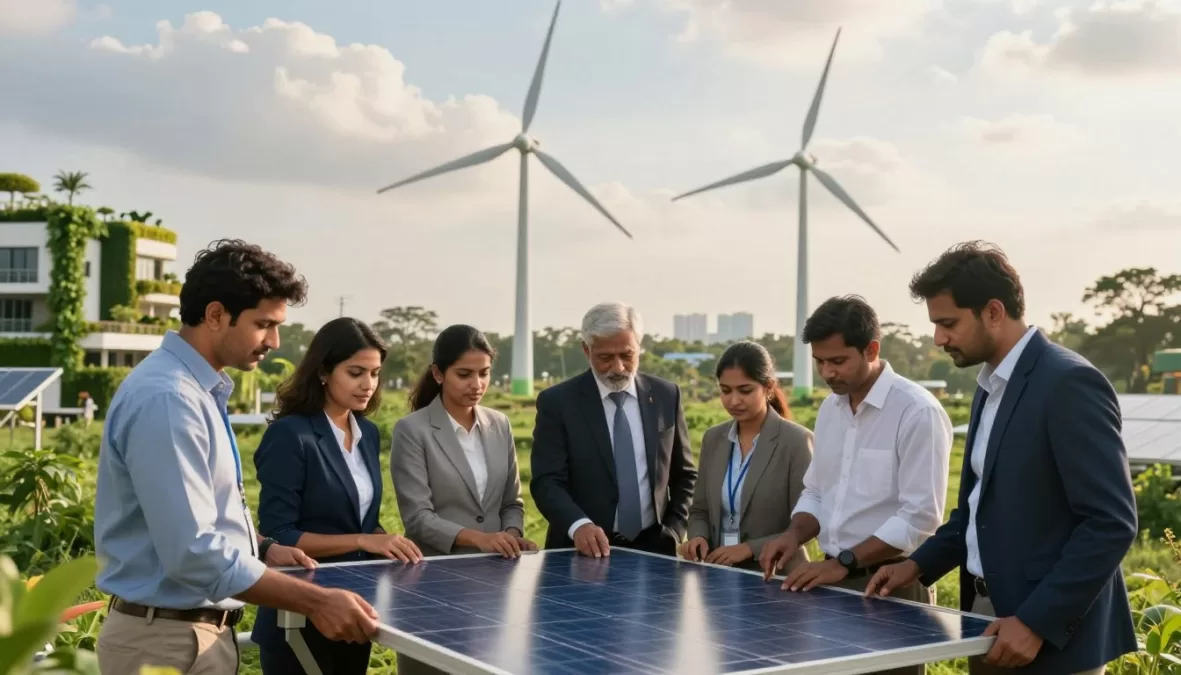
As India accelerates its renewable energy goals, the demand for highly skilled professionals continues to outpace the current supply. The transition to a sustainable economy demands a unique blend of traditional engineering fundamentals and specialized knowledge. This shift is creating a surge in green technology employment opportunities for those who can adapt to new industry standards.
Technical Proficiency in Solar and Wind Engineering
Engineers today must possess deep knowledge of hardware systems to remain competitive. Specifically, expertise in battery chemistry, Battery Management Systems (BMS) architecture, and power electronics design is currently acutely scarce relative to market demand. These technical skills are the backbone of modern solar and wind infrastructure.
Professionals who master these hardware components are highly valued by top firms. Technical precision in these areas ensures that renewable assets operate at peak performance levels over their entire lifecycle.
Data Analytics and Smart Grid Management
The modern grid is no longer just about physical wires and turbines. It is increasingly defined by software-driven optimization and real-time data processing. Professionals pursuing energy efficiency jobs must understand how to integrate digital tools into traditional energy frameworks.
“The future of energy is not just about generating power, but about managing it with intelligence and precision.”
Smart grid management requires a strong grasp of predictive analytics. By analyzing consumption patterns, experts can reduce waste and improve the overall reliability of the national power supply.
Project Management in Large-Scale Infrastructure
Deploying massive solar parks or offshore wind farms requires more than technical knowledge. It demands sophisticated project management skills to navigate complex regulatory and logistical hurdles. Leaders in this space must coordinate between government agencies, private investors, and local communities.
Effective project management ensures that large-scale infrastructure projects remain on schedule and within budget. This capability is a critical driver for green technology employment in India, as firms prioritize candidates who can manage the lifecycle of multi-million dollar energy assets.
Educational Pathways and Certification Programs
As the environmental job market India continues to expand, the demand for specialized talent has outpaced traditional academic output. Professionals aiming to secure eco-friendly job opportunities must now navigate a landscape that blends formal university education with agile vocational training.
University Degrees and Specialized Vocational Training
Leading universities across India are rapidly updating their curricula to include degrees in renewable energy engineering and sustainable management. These programs provide the foundational knowledge required to tackle complex grid integration and solar infrastructure projects.
Beyond traditional degrees, vocational training centers are playing a critical role in closing the skills gap. These institutions offer hands-on experience with wind turbine maintenance and solar panel installation, ensuring that graduates are job-ready from day one.
Industry-Recognized Certifications for Professionals
For those already in the workforce, industry-recognized certifications serve as a vital bridge to new roles. Credentials from global bodies or local energy councils validate technical expertise in areas like smart grid management and energy auditing.
- Certified Energy Manager (CEM) for infrastructure oversight.
- Solar PV Design Specialist for technical engineering roles.
- Wind Energy Technician Certification for field-based operations.
Upskilling Initiatives for Traditional Energy Workers
The transition toward a green economy requires a massive shift in human capital. Because the external market often struggles to supply the necessary volume of specialized talent, many organizations are now building internal EV academies and training hubs.
These corporate initiatives allow companies to retrain their existing workforce for eco-friendly job opportunities. By investing in internal upskilling, firms ensure that their staff remains relevant while supporting the broader growth of the environmental job market India.
| Pathway Type | Target Audience | Primary Benefit | Duration |
|---|---|---|---|
| University Degree | Fresh Graduates | Deep Theoretical Knowledge | 2-4 Years |
| Vocational Training | Technicians | Practical Skill Acquisition | 6-12 Months |
| Corporate Upskilling | Existing Employees | Role Transition | 3-6 Months |
| Professional Certs | Experienced Pros | Industry Credibility | 1-3 Months |
Economic Impact and Salary Trends in the Sector
As sustainability transitions from a peripheral corporate social responsibility activity to a core business metric, the economic value of specialized roles is rising sharply. Companies across India are prioritizing decarbonization, which has created a surge in demand for high-level expertise. This shift is fundamentally altering the compensation landscape for professionals entering the green market.
Compensation Benchmarks for Renewable Energy Roles
The financial rewards for those pursuing renewable energy jobs are becoming increasingly competitive. For instance, Sustainability Manager roles in India currently command salary ranges between INR 18–40 LPA, depending on the scope of the decarbonization program and the complexity of the organization.
Professionals specializing in the following areas are seeing the highest salary growth:
- ESG reporting and compliance management
- Advanced carbon accounting and auditing
- Net-zero strategy development
- Technical oversight of large-scale infrastructure
Long-term Career Stability in the Green Economy
The transition toward a low-carbon economy provides unmatched career stability for skilled workers. As national mandates for net-zero emissions tighten, organizations must retain talent capable of navigating complex regulatory environments. This necessity ensures that energy efficiency jobs remain resilient against broader economic fluctuations.
Employees who build expertise in grid management and sustainable technology are positioning themselves for long-term success. The integration of green practices into every facet of the economy means that these skills will remain in high demand for decades to come.
The Role of Startups in Job Creation
The startup ecosystem is a primary driver of innovation, fostering diverse opportunities across the entire energy value chain. These agile companies are often the first to adopt emerging technologies, creating roles that did not exist just a few years ago. By focusing on niche solutions, startups are effectively expanding the total number of available renewable energy jobs.
These ventures offer a unique environment where professionals can influence the direction of sustainable technology. Whether through hardware development or software-driven energy management, startups provide a dynamic path for those looking to make a tangible impact while securing their financial future.
Challenges Facing the Renewable Energy Sector India
The path toward a sustainable future is paved with complex logistical and regulatory difficulties. While the industry is expanding at a record pace, professionals must navigate several systemic bottlenecks that impact project delivery and long-term planning. Understanding these obstacles is essential for anyone pursuing a career in this dynamic field.
Supply Chain Disruptions and Material Shortages
Global supply chain volatility remains a primary concern for developers and manufacturers. For large manufacturers and FMCG companies, Scope 3 emissions can account for 70–90% of total emissions, which significantly complicates supply chain management and procurement strategies.
These material shortages often lead to project delays and increased costs for firms. Professionals working in green technology employment must develop robust contingency plans to mitigate these risks. Adaptability and strategic sourcing have become core competencies for project managers in this space.
“The transition to clean energy is not just a technological challenge; it is a logistical marathon that requires resilience and foresight.”
Regulatory Hurdles and Grid Integration Issues
The renewable energy sector India faces a complex web of state and central regulations. Navigating these policy frameworks requires patience and a deep understanding of local compliance standards. Developers often encounter delays when attempting to secure land or environmental clearances for large-scale projects.
Furthermore, integrating intermittent power sources into the existing national grid presents a major technical hurdle. Engineers are tasked with upgrading infrastructure to handle the influx of solar and wind energy effectively. Addressing these grid stability issues is vital for the continued success of green technology employment across the country.
- Streamlining land acquisition processes for faster project deployment.
- Investing in smart grid technology to manage energy distribution.
- Harmonizing state-level policies to reduce bureaucratic friction.
Strategies for Securing Employment in Green Energy
Navigating the path toward sustainable energy careers demands a blend of strategic networking and hands-on experience. The renewable sector in India is evolving rapidly, requiring candidates to demonstrate both technical expertise and a genuine passion for the mission of decarbonization.

Networking within the Renewable Energy Ecosystem
Building a professional network is the most effective way to uncover hidden job opportunities. You should attend industry conferences, such as those hosted by the Ministry of New and Renewable Energy, to meet key stakeholders and decision-makers.
Engaging with professional groups on platforms like LinkedIn allows you to stay updated on industry trends. Meaningful connections often lead to referrals, which are highly valued in the competitive landscape of sustainable energy careers.
“The best way to predict the future is to create it.”
Leveraging Digital Platforms for Job Discovery
Modern job seekers must utilize specialized digital platforms to track openings in the green sector. Many top-tier firms now post exclusive roles on niche energy portals rather than general job boards.
Set up automated alerts for keywords like “solar engineering,” “grid management,” or “green hydrogen” to ensure you never miss a deadline. Maintaining an active and updated profile is essential for catching the attention of recruiters who scout for top talent daily.
Building a Portfolio of Sustainable Projects
A strong portfolio serves as tangible proof of your technical capabilities. Whether you have completed academic research, volunteer work, or personal projects, documenting your contributions is vital for sustainable energy careers.
Include detailed case studies that highlight your problem-solving skills and your ability to manage complex infrastructure tasks. Employers are looking for candidates who can demonstrate their commitment to the green transition through real-world results.
Conclusion
India stands at the threshold of a massive energy transformation. The renewable sector is entering a phase of rapid expansion that creates diverse and rewarding career paths for skilled professionals.
You can secure long-term success by mastering high-demand technical competencies. Staying updated on policy shifts from organizations like the Ministry of New and Renewable Energy helps you navigate this changing landscape. These insights allow you to identify the best eco-friendly job opportunities available in 2026 and beyond.
Companies such as Tata Power and Adani Green Energy continue to lead the charge in domestic infrastructure. Your ability to adapt to these shifts determines your professional trajectory in the coming years.
The transition to a sustainable future represents a significant professional milestone for the next generation of leaders. This guide serves as a roadmap for your journey into the green economy. Explore these eco-friendly job opportunities to build a career that balances personal growth with global environmental impact.